
The Sicilian relationship with time: “slowness” as a way of living
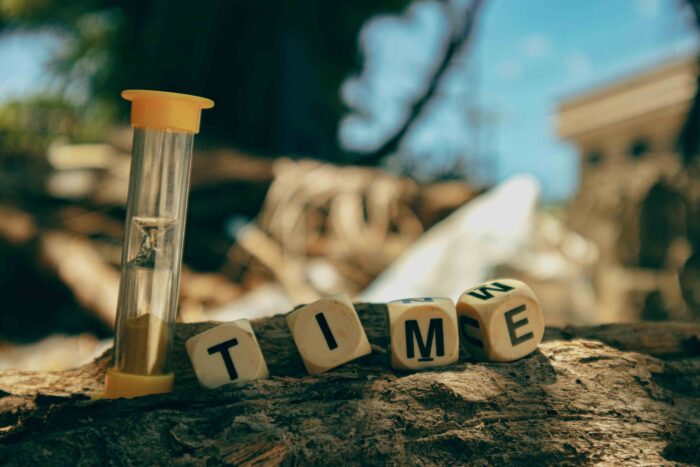 There’s a precise moment when you realize that in Sicily, time flows differently. It’s not when you look at your watch – that shows the same hours everywhere – but when you stop looking at it. It might happen during a lunch that stretches on for no particular reason, somewhere between a serving of caponata and a glass of wine. Or while gazing at the sea, still and endless, as if it had nowhere it needed to be. Or again, in the golden silence of a summer afternoon, when the shutters are half-closed and the world outside seems suspended. In Sicily, time is not a straight line. It’s a living, breathing matter, soft, elastic. It expands and contracts, adapting more to the needs of the soul than to the demands of a schedule. And the Sicilian relationship with time is truly unique!
In today’s world, we’re used to thinking of time as something to optimize. It’s a resource to manage, to use, not to “waste.” In Sicily, instead, time is first and foremost an experience. You don’t “fill” time, you inhabit it. This difference reveals itself in the smallest details: in shops that close for lunch without worrying about lost revenue, in conversations between neighbors that can last half an hour or two, without anyone checking the time, in everyday rituals like having coffee at a bar—which is never just a quick break, but a social moment, almost sacred. It’s an approach that can feel disorienting at first. But it doesn’t take long to grasp its depth: in Sicily, time isn’t meant for producing. It’s meant for living.
Slowness as a form of resistance
There’s also a deeper, almost political dimension to this relationship with time. Sicilian slowness is not just a habit, it is, in some ways, a form of resistance. Against frenzy, against uniformity, against the idea that a day’s worth is measured by how much you get done. Slowing down here means protecting something human. It means choosing to stop and talk, to truly listen, to dedicate time to what isn’t immediately “useful.” It’s a way of preserving relationships, traditions, and identity. And it’s no coincidence that many of the island’s most authentic experiences are rooted in this slower rhythm: a family dinner that turns into collective storytelling, a village festival that follows ancient patterns, a aimless walk through streets steeped in history.
The weight of history in the Sicilian relationship with time
The Sicilian relationship with time is also shaped by a millennia-old layering of history. Sicily is a land that has witnessed the passage of civilizations, dominations, and cultures. Greeks, Romans, Arabs, Normans, Spaniards, each has left a mark, not only in architecture or cuisine, but also in how time itself is perceived. This historical depth creates a particular awareness: everything passes, everything changes—and yet, something always remains. Perhaps this is why Sicilians seem less obsessed with the future. Not because they lack ambition, but because they instinctively understand that time stretches far beyond the individual. There’s a subtle trust that things will find their place. That not everything needs to be controlled. That there is a greater rhythm to which one can, at least in part, surrender.
The present as a privileged space
If the past runs deep and the future feels less urgent, then the present naturally becomes the main character. In Sicily, the present has a unique density. It is made of sensations, flavors, and relationships. It’s not a fleeting moment, it’s a place to fully inhabit. This is reflected in everyday life: in the way people eat – slowly, savoring every bite; in the way they converse – with pauses, digressions, and returns; in the way they take in a landscape, without rushing to move on. It’s a present that doesn’t need to be “productive” to be meaningful.
The time of waiting
Another essential element is waiting. In Sicily, waiting is not necessarily negative. It’s not just something to avoid or fill. On the contrary, it can be a fertile space. Waiting for a sunset, for someone, for an event. Waiting for something to mature, to unfold at the right moment. This mindset requires patience, of course. But it also offers a kind of freedom: the freedom not to force things, to let them happen when they’re ready.
Between myth and reality
Of course, it would be naïve to romanticize all of this. A “relaxed” relationship with time can also turn into inefficiency, chronic delays, and organizational challenges. It’s not always poetic, and those who live and work in Sicily know that well. But reducing it to that would be just as superficial. Because beyond the clichés, there truly is a different way of experiencing time here. A way that, despite its contradictions, offers an alternative perspective on what really matters.
A subtle lesson: what lies behind the Sicilian relationship with time
Perhaps this is the real point: the Sicilian relationship with time is not just a cultural curiosity. It is, in some ways, an invitation. An invitation to slow down, at least every now and then. To stop measuring everything in terms of efficiency. To allow yourself the luxury, now increasingly rare, of “wasting” time. Because in that apparent waste, something valuable often emerges: an unexpected conversation, a moment of beauty, a genuine connection. In a world that keeps moving faster and faster, Sicily reminds us that another rhythm exists—more human, more sensory, more real. And perhaps that is exactly why it is so hard to forget.
