
Epiphany in Sicily: traditions, rituals and sweets that bring Christmas to a close
 In Sicily, Epiphany is neither a minor holiday nor a simple extension of Christmas. Rather, it is a moment of transition, charged with symbolic, religious and cultural meaning. Epiphany in Sicily does not explode, it does not make noise: it closes, gathers, puts things in order. It is the day when the festivities truly come to an end, and they do so with a solemnity that is distinctly Sicilian. The well-known saying “Epiphany takes all the holidays away” is not just a figure of speech here: it is a fact. Nativity scenes are taken down, daily life resumes, eyes turn forward. But before that happens, Sicily celebrates Epiphany in its own way, weaving together faith, folk traditions and an imagination rooted in centuries of history.
The holidays… are filed away! January 6th marks the end of the most glittering days of the year, the ones spent with family, the most intimate ones. And the ones when you ‘cheat’ with an extra sweet or two! We’ve already talked about Epiphany in Sicily here (read the article “Epiphany in Sicily, curiosities and tradition”), but today we want to tell you something different! And maybe, who knows, the epilogue of these Christmas holidays will feel a little less sad with Sicilian Secrets.
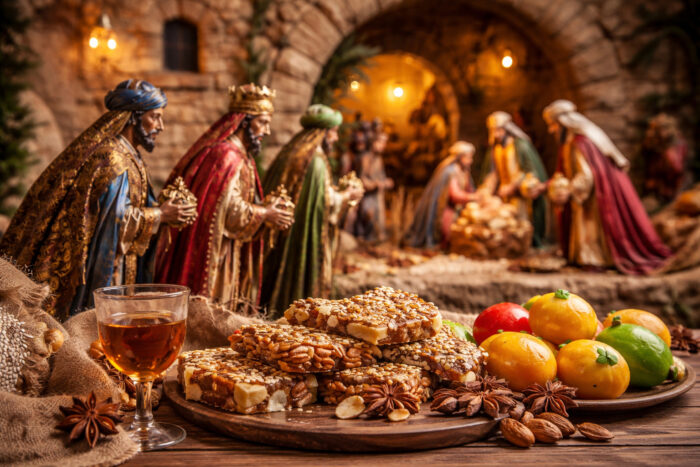
From a religious point of view, Epiphany celebrates the manifestation of Jesus to the world through the visit of the Three Wise Men. In Sicily, this Gospel episode takes on particular importance: more than the Befana, it is the Three Wise Men who are the true protagonists of Epiphany in Sicily. Their presence is deeply felt in nativity scenes, liturgies and sacred representations. The Three Wise Men embody the idea of travel, of encounters between cultures, of recognizing the sacred through the eyes of the outsider. A theme that, not by chance, resonates deeply on an island that has always been a crossroads of peoples, trade and religions.
The Three Wise Men and nativity scenes: the heart of Epiphany in Sicily
If there is one place where Epiphany in Sicily takes visual and narrative form, it is the nativity scene. In Sicilian nativities – traditional, artistic or living – January 6th is the climactic moment: the Three Wise Men finally arrive at the manger. In handcrafted nativity scenes, often made of terracotta or papier-mâché, the Wise Men are depicted wearing sumptuous garments, intense colors and almost theatrical details. This is no coincidence: Sicily has a long baroque and scenic tradition, and the nativity scene is one of its expressions. In inland villages, Epiphany in Sicily is often celebrated with living nativities and historical reenactments. Costumed processions move through the streets, the Magi arrive on horseback or on foot, accompanied by extras and traditional music. These are not tourist shows in the superficial sense of the term, but community rituals involving entire towns.

The Befana in Sicily: she is present, but not the star
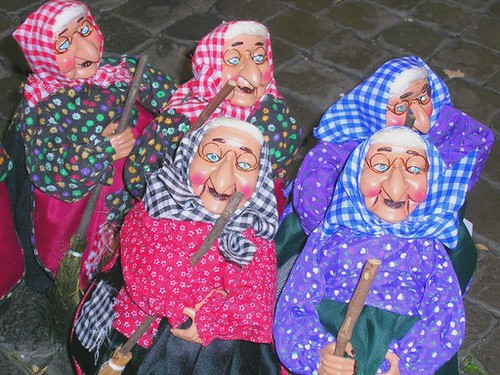
The figure of the Befana also exists in Sicily, especially in urban settings. In Palermo, Catania or Messina, there is no shortage of events for children, markets and public celebrations. However, the Befana has never played the central role she holds in other Italian regions. In the imagination surrounding Epiphany in Sicily, the Befana is a gentle, secondary presence, often ‘softened’: less witch, more grandmother. She brings sweets, candies and small gifts, but never overshadows the religious dimension of the celebration. She is an adopted figure, not an original one, coexisting with older and more deeply rooted traditions.
Epiphany sweets in Sicily: closing flavours
Like any celebration worthy of the name, Epiphany in Sicily also passes through the table. But take note: this is not about excess or Christmas abundance. Epiphany sweets are closing sweets, often linked to traditions of reuse, preservation and simplicity.
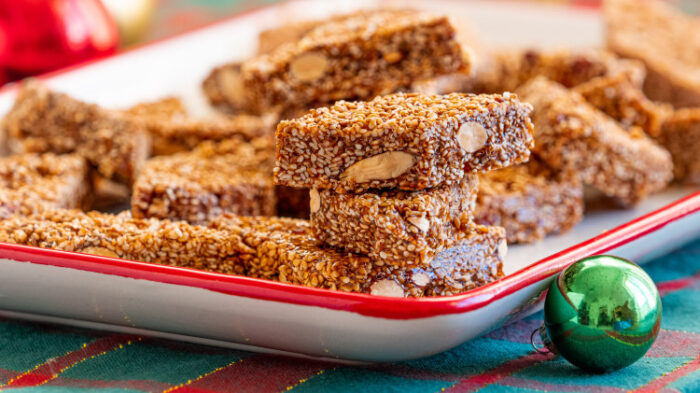
Cubbàita (or cubaita)
It is one of the most authentic symbols of Epiphany in Sicily. An ancient nougat made with sesame seeds, honey and citrus peel, found especially in eastern Sicily. Cubbàita has Arab origins and, on its own, tells the story of the island’s cultural stratification.
Frutta martorana (Marzipan fruit)
It is not exclusive to Epiphany, but it often appears as a gift or as the ‘final’ sweet of the holidays. Colorful, precious, almost symbolic: more to be admired than eaten.
Dry biscuits and spiced sweets
In many areas of the island, Epiphany in Sicily is accompanied by traditional biscuits, often dry, scented with cinnamon, cloves or citrus. Sweets that last over time, as if to gently accompany the slow return to everyday life.
Folk rituals and beliefs linked to Epiphany in Sicily
Alongside official religion, Epiphany in Sicily preserves traces of folk rituals and ancient beliefs. In some villages, water is blessed; in others, January 6th is attributed a protective value for the coming year. In the countryside, Epiphany traditionally marked the resumption of agricultural work after the Christmas break. It was a threshold day, when the suspended time of the holidays was left behind to return to the rhythm of the land.
Epiphany as the end of Christmas period: a serious matter
In Sicily, the end of Christmas period cannot be postponed. Epiphany in Sicily truly closes the cycle: decorations are taken down, nativity figurines are put away, and routine resumes. This gesture has an almost ritual value, a way of restoring order, both inside and outside the home. There is no overt melancholy, but a quiet awareness: everything has its time, and the time for festivities is over. Telling the story of Epiphany in Sicily means telling the story of an island that does not love excess, but meaning. A land that knows how to celebrate without shouting, that closes rather than drags things out, that turns a transitional feast into a moment of collective reflection. For travellers, experiencing Epiphany in Sicily is a precious opportunity: fewer crowds, more authenticity, closer contact with local communities. It is the ideal moment to discover Sicily beyond the clichés, when the island reveals itself for what it truly is. Epiphany in Sicily is, in short, a silent revelation. It remains faithful to its name: not spectacular, not noisy, but profound. It is the day when everything reveals itself for what it has been and for what it will be. And perhaps this is the most beautiful secret of all: in Sicily, even the end of the holidays becomes a story worth listening to.
