
Maria Giambruno and L’Arte di Essere sé Stessi: “Images shouldn’t crush you, they should set you free”
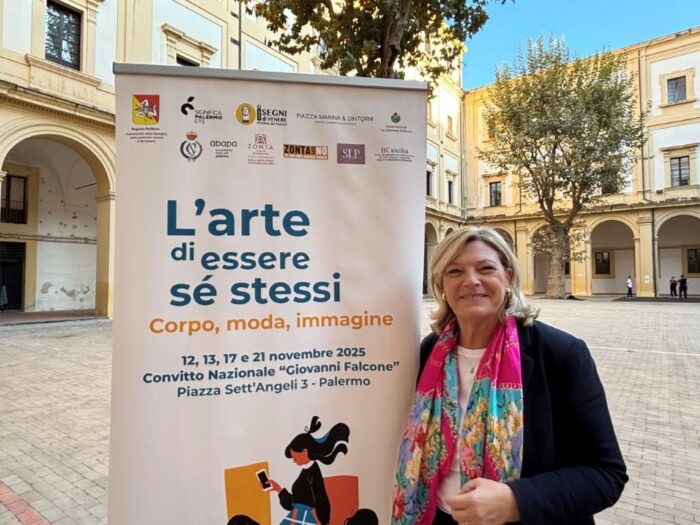
At a time when young people grapple with fluid identities, social pressures, and visual languages that often amplify insecurities and stereotypes, Maria Giambruno is leading a project that overturns traditional narratives around body, image, and authenticity. A journalist, cultural promoter and founder of the Zonta International Palermo Zyz chapter, Maria Giambruno created “L’Arte di Essere sé Stessi” (The Art of Being Yourself), a programme that brings together fashion, creativity and awareness to help students construct their own personal narrative with freedom and respect. In this interview, she guides us through her vision and the educational value of a workshop that speaks to young people through their own language. Sicilian Secrets met her.
Q: Let’s start from you: who is Maria Giambruno today, and what personal and professional path led you to develop a project that intertwines body, image and authenticity?
A: Who is Maria Giambruno? I am a journalist and a tireless seeker and builder of beauty. I have always been committed to issues of equality and parity; a commitment that began in the early 1990s thanks to an ISAS course that made me understand how necessary it was to work on a culture of respect and equal opportunities. A vocation that became a mission through many associative experiences, culminating thirteen years ago in the founding of Zonta International Palermo Zyz, the local chapter of the oldest international organisation for women’s rights. For me, beauty lies in words, sounds, colours, and style. It is in this search that I created “Una Marina di Libri”, a festival that over sixteen years has become a place of encounter, dialogue, experimentation and new narratives. Within it, for the past three editions, “I Segni di Venere” has taken shape, an exhibition, or rather a special section, that looks at the world through the eyes of women and represents a precious creative laboratory.
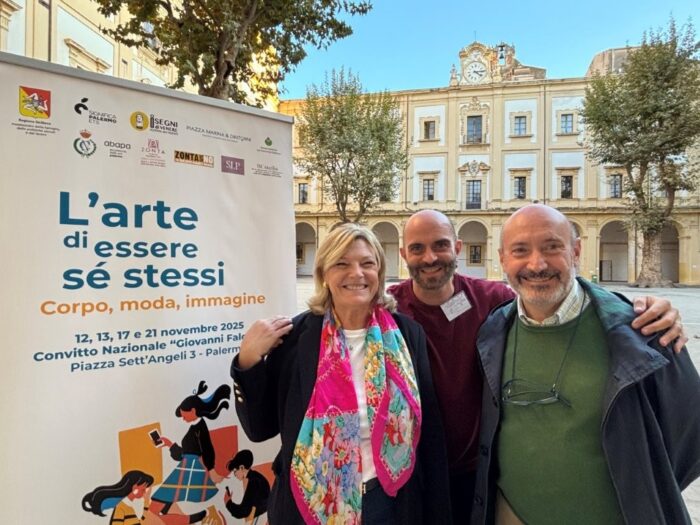
Q: “L’Arte di Essere sé Stessi” was born from a multifaceted collaboration between Significa Palermo, I Segni di Venere and the CCN Piazza Marina & Dintorni. How did the idea for the project come about, and what cultural or social need inspired it?
A: After Covid, I realised how difficult it had become for young people to bare themselves. Social media has amplified the sense of inadequacy, turning small fears into silence and vulnerabilities into distress and disorders. Hence the need to open new channels of dialogue, transforming body and image into tools of awareness rather than judgement. “L’Arte di Essere sé Stessi” speaks of identity, the freedom to be and express oneself, and self-determination in a young, fresh, fun and contemporary way. It is a project supported by the Regional Department for Family Policies, which we carried out together with the association Significa Palermo, Le Gemme, the Natural Shopping District Piazza Marina & Dintorni, the Academy of Fine Arts, and the Convitto Nazionale “Giovanni Falcone”, which is also the lead school of the Al Qsar Network involving over 6,000 students from the historic centre. The project responds to the need to offer new tools to talk to young people about equality, respect, and personal identity at a time when image and visual languages play a decisive role in shaping the self.
Q: Fashion and image, often accused of generating stereotypes, here become tools to promote authenticity, respect and inclusion. How did you work to overturn these narratives and turn them into positive educational languages?
A: We chose to use a language that young people know and feel close to, helping them to be real, not to flex an image that doesn’t belong to them, but to own their style — to choose themselves freely and consciously. Because image shouldn’t crush you; it should set you free. Far from the idea of vanity or superficiality, we restored fashion to its most authentic meaning: a form of expression and an act of self-determination. Choosing how to present oneself to the world through one’s outfit is a natural, instinctive gesture, but also a deeply political one: it means choosing for oneself, not to please or conform. During the workshops, this concept was the common thread. Fashion was used as a tool to bring out the deepest part of the students— their need to represent themselves, their fears, their limits — and from there we talked about self-esteem, equality, respect, empowerment, uniqueness and authenticity. We transformed fashion and image from models to imitate into instruments for recognising one’s own value and strengthening self-esteem. Anyone can change their image through clothing: when you choose a style that aligns with who you are, you feel safer, freer, more authentic.
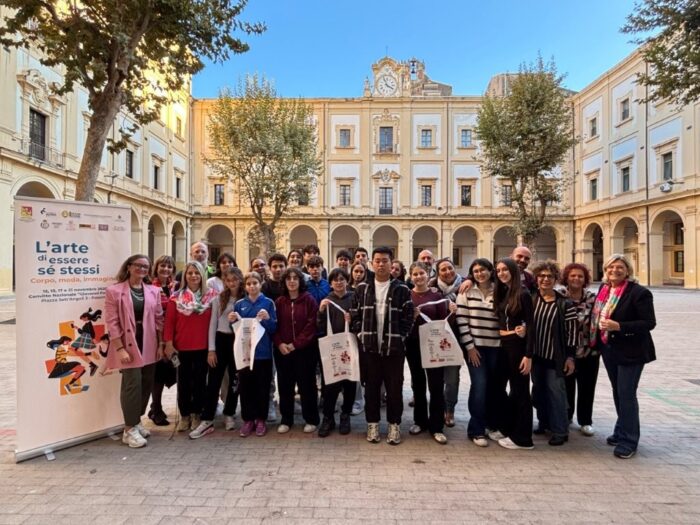
Q: How did you move at a practical level?
A: In the workshops we showed that style is a choice, not an imposition, and that even changes in the body can become opportunities to find a new coherence between what is shown and what is felt. And above all, that weaknesses can turn into strengths. Through creative activities, the students deconstructed stereotypes and learned to distinguish the authentic from the fabricated. In this way, fashion becomes a means to talk about respect and freedom, and image becomes a space where external pressures can be recognised and defused.
Q: The project involved students from the Convitto Nazionale and the Academy of Fine Arts. Why did you choose these specific groups of young people, and what have you observed in the way they experience body, identity and representation?
A: The Convitto Nazionale and the Academy of Fine Arts represent two different but complementary worlds: adolescents in full identity formation and young artists already working on self-representation. From this dual perspective came a very rich dialogue. We met extremely sensitive young people, aware of external pressures but often afraid to expose themselves. The connection was further strengthened through the creation of “Chi sono quando mi vesto” (Who Am I When I Get Dressed), a short film about the experience, produced by Convitto students under the guidance of two postgraduates from the audio-video course at the Academy.

Q: The initiative is part of the “Zonta Says No” campaign against gender-based violence. How does the creative path proposed to the students connect to the themes of violence prevention and a culture of respect?
A: Working on image means working on respect: for oneself, for others, and for personal boundaries. Violence prevention also stems from the ability to recognise one’s identity, defend one’s space, understand consent and read the signs of unhealthy relationships. Through artistic activities and guided reflections, the students explored the value of the body as a place of freedom, not imposition; of image as personal storytelling, not a weapon of judgment. In this sense, the project contributes to the culture of respect at the heart of the “Zonta Says No” campaign, showing young people that violence is also fought by changing language, perspectives and everyday behaviours.
Q: Sicily is a land in which tradition, image and social roles still carry significant weight. According to Maria Giambruno, what is the level of awareness and sensitivity among Sicilian youth regarding authenticity, consent and the construction of personal image?
A: Sicilian young people possess a highly developed sensitivity. They grow up in a context where tradition, social roles and visual culture carry strong weight, and they intensely feel the need to free themselves from imposed models, though they often don’t know how. They thirst for authenticity and desire relationships based on mutual respect, but struggle to be heard and to find safe spaces for expression. Projects like this offer them concrete tools to understand who they are and to build an image consistent with what they feel.
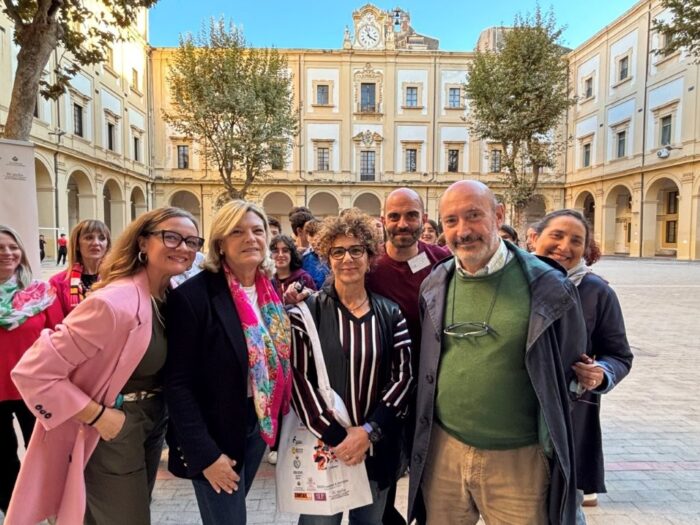
Q: After the workshops and direct interaction with the students, what was the most evident impact you observed in terms of awareness, openness, or changes in how they perceive themselves and others?
A: The most evident impact was a shift in emotional posture: more openness, more listening, and a greater ability to express themselves. Through play, they found a way to name their emotions. Many developed a new sense of responsibility in the use of their image — from social media to daily life — understanding that every representation carries a message. The project showed them that they can be protagonists of their own narrative, not spectators.
Q: After this edition, what prospects do you imagine for “L’Arte di Essere sé Stessi”? New schools, new languages, a broader network? In Maria Giambruno’s wish list, where would she like this path to go in the coming years?
A: I would like “L’arte di essere sé stessi” to become a programme permanently adopted by schools. Fashion is an incredibly powerful language to help young people get to know themselves, feel good and enhance their uniqueness, addressing complex topics through tools that truly resonate with their world. This is why I believe schools should confidently choose to integrate this project into their educational offer, giving their students a concrete opportunity for growth, security and self-awareness.
